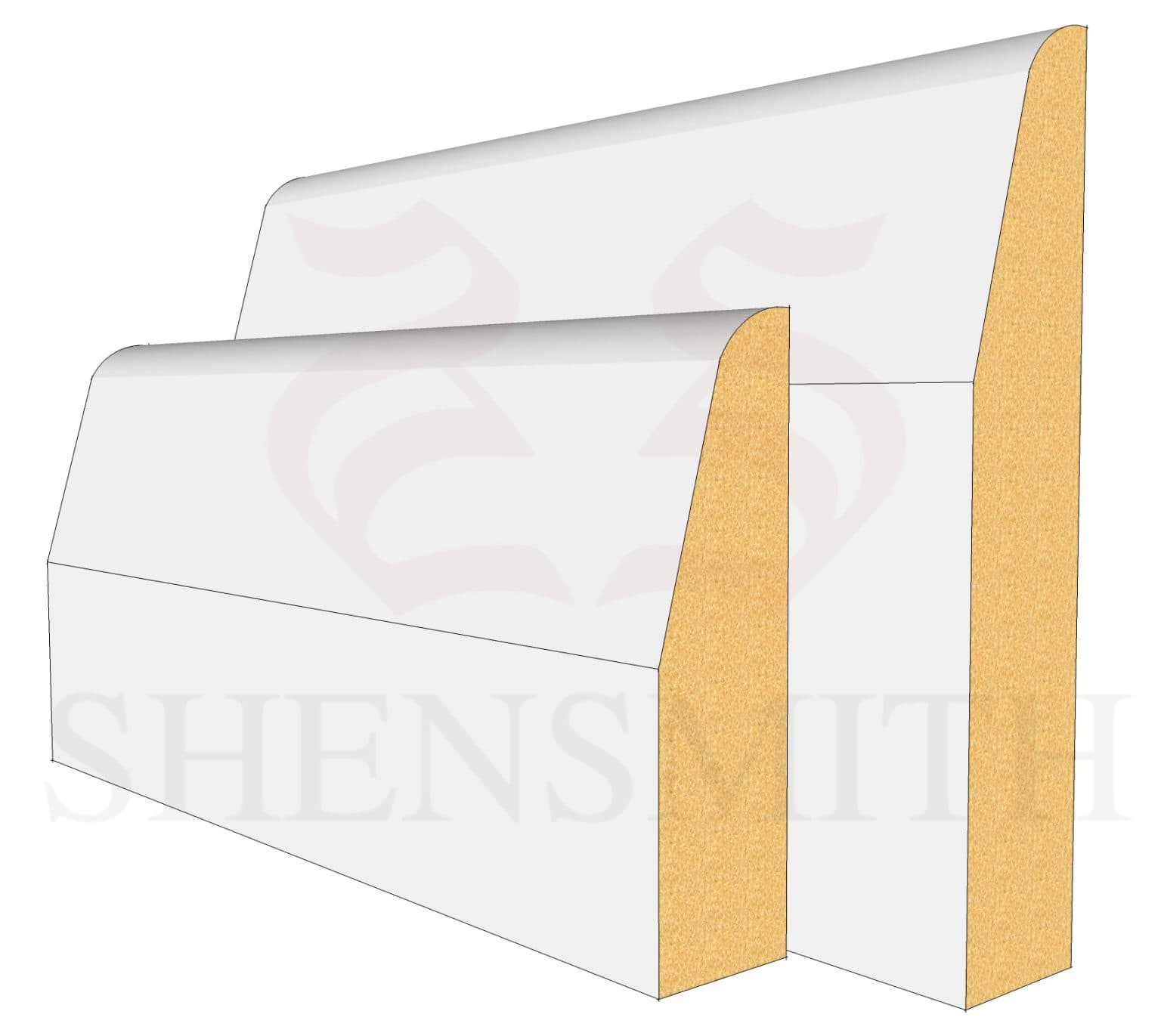
A bevel rather than a curve
Chamfered skirting replaces a rounded or ornamental moulding with a sloping face near the top. The bevel breaks the edge and creates a clean change of plane, while leaving the main face of the board straightforward.
Not all chamfers are interchangeable
The width and angle of the bevel affect the appearance. A shallow chamfer can look restrained; a larger bevel can become a more noticeable part of the design. When replacing a length, record where the bevel starts and how far it runs across the thickness.
Choose a clear relationship with the room
Chamfered boards can work with simple doors, square-edged furniture and uncluttered wall finishes. Compare them with bullnose if you prefer a softer edge, or square edge if you want the plainest outline. Use samples at the intended height.
Fitting and finishing the bevel
Keep the angle clean when sanding and filling joints. Rounded-off repairs can make a crisp profile look inconsistent from one length to the next. For internal corners, assess the complete section and the wall angle before choosing and cutting the joint.
Materials, sizes and enquiries
MDF and timber behave differently and suit different finishing approaches. Compare the material and actual sample before choosing. Confirm the available height, thickness, length and finish for your enquiry; this profile directory does not establish current stock or a fixed product specification.
Your questions, answered.
Is chamfered the same as bevelled?
Both terms can describe a sloping cut that breaks an edge. The width and angle still need to be specified when matching an existing section.
Should I choose chamfered or bullnose?
Chamfered gives an angled edge; bullnose gives a rounded one. Compare the actual shapes with the doors and other joinery rather than choosing by name alone.