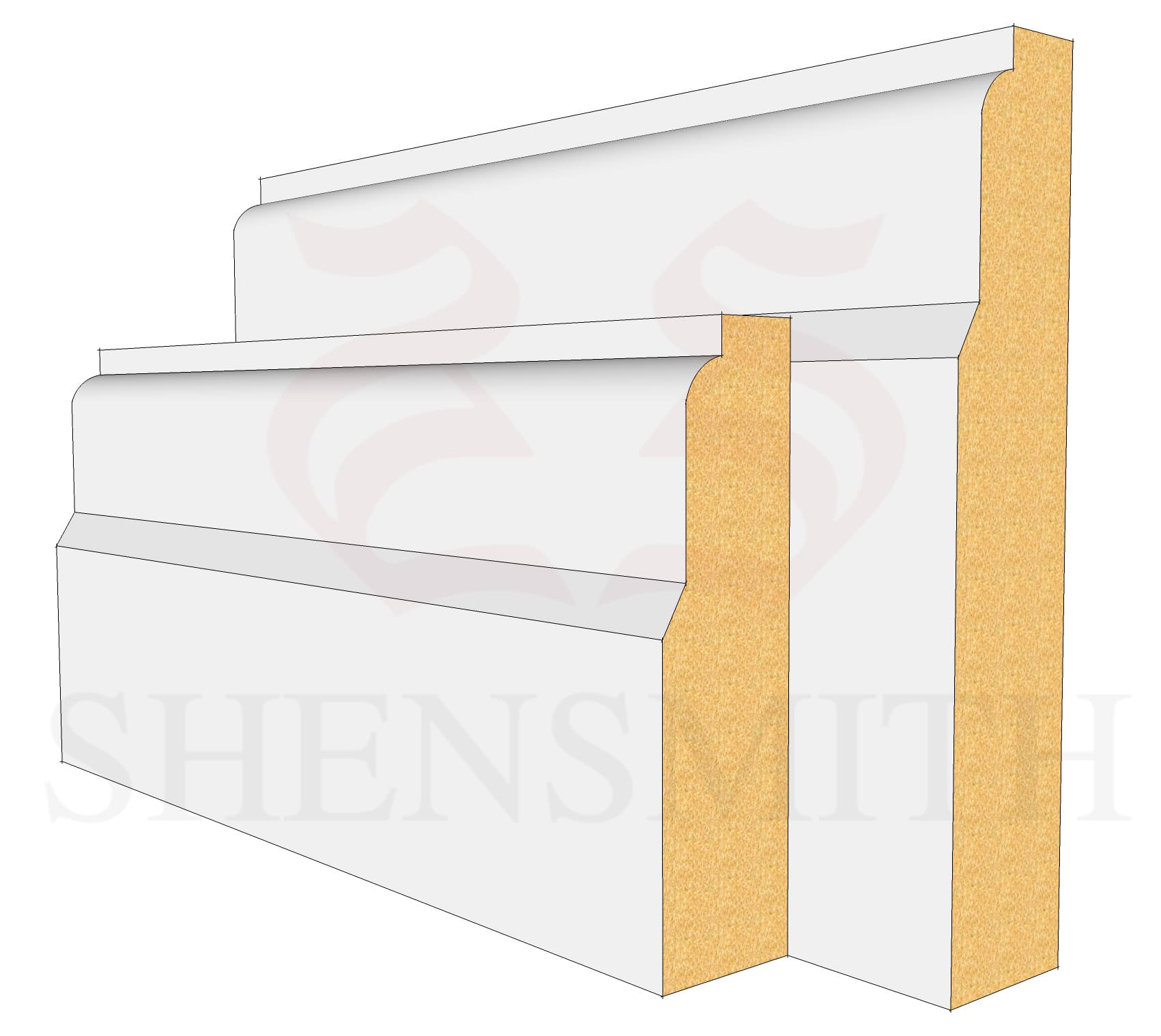
A shaped traditional detail
Lamb’s tongue describes a family of mouldings with a shaped curved transition and smaller changes of level. The archived example has a defined upper flat and a curved face above the lower portion. Other patterns may arrange those details differently.
Why matching needs a section
Lamb’s tongue names are particularly unhelpful as a complete specification. Photograph an exposed end where possible and compare each flat, curve and transition. Overall height and thickness matter, but they do not establish whether the decorative area will line up.
Assess it beside existing features
The moulding can sit comfortably with traditional doors and other shaped joinery. Before choosing a tall or short board, consider the amount of plain face left below the detail. Look at a sample from across the room as well as inspecting it close-up.
Keep the smaller details visible
Old layers of paint can soften a moulding and make identification difficult. Clean the sample before comparing it, using a preparation method appropriate to the existing coating. When redecorating, follow the coating instructions without burying the finer transitions.
Materials, sizes and enquiries
MDF and timber behave differently and suit different finishing approaches. Compare the material and actual sample before choosing. Confirm the available height, thickness, length and finish for your enquiry; this profile directory does not establish current stock or a fixed product specification.
Your questions, answered.
Does lamb’s tongue identify one exact shape?
No. It identifies a profile family. Curves, flats and moulding depths differ, so a sample or section drawing is needed for accurate matching.
What should I measure on an existing lamb’s tongue board?
Record overall height and thickness, then measure the positions of the flats and curved detail. Add a clear end-on photograph with a ruler for scale.