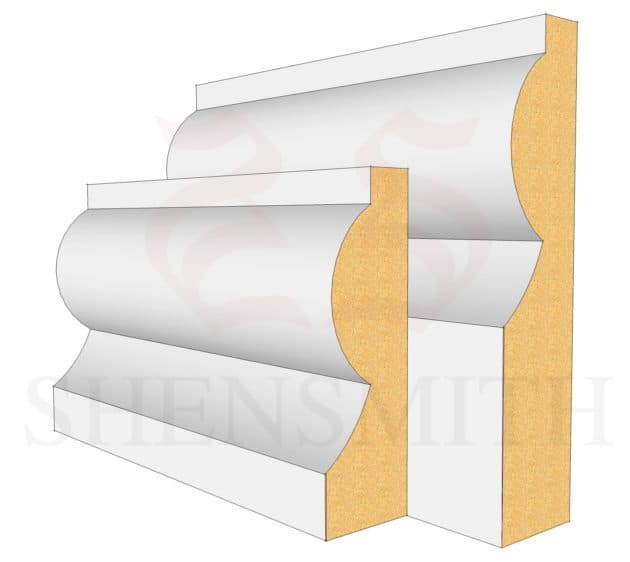
What makes torus recognisable?
Torus skirting is known for its rounded roll near the top. A shoulder or recessed transition separates that roll from the flatter part of the board. The diameter of the curve and the depth of the shoulder vary between patterns, which matters when matching an existing room.
Compare torus with ogee
Torus gives a clear, rounded outline. Ogee changes direction through an S-shaped curve and can look more flowing or decorative. Neither name fixes the board height or thickness. Put the two samples against the same wall and compare them from normal viewing distance.
Allow for the shoulder
The detail below the roll produces a visible shadow line and can collect dust more readily than a completely plain board. When decorating, avoid filling the recess with a heavy coat of paint. Inspect an existing sample after cleaning so layers of paint do not disguise the original shape.
Plan the corners and door junctions
The roll must continue convincingly around the room. A carefully cut internal scribe follows the adjoining profile, while external corners need accurately measured mitres. At doorways, compare the thickness and visual weight of the torus board with the proposed architrave.
Materials, sizes and enquiries
MDF and timber behave differently and suit different finishing approaches. Compare the material and actual sample before choosing. Confirm the available height, thickness, length and finish for your enquiry; this profile directory does not establish current stock or a fixed product specification.
Your questions, answered.
Can I match torus by measuring only the height?
No. Measure thickness, the roll and the shoulder as well. Different torus patterns can have the same overall board height.
Is torus more decorative than bullnose?
Torus normally has a distinct roll and shoulder, whereas bullnose has a simpler rounded edge. The actual prominence depends on the section and its proportions.